Global Journal of Fertility and Research
Gene–Nutrient–Lifestyle Interactions in Female Infertility: Unravelling the Vitamin D–PCOS–Metabolic Axis: An In-Depth Review
1Clinicogenomics Lab, Sir Surendranath Banerjea Advanced Research Centre, Department of Physiology, Surendranath College, University of Calcutta, India
2Department of Physiology, Vidyasagar Metropolitan College, University of Calcutta, India
Author and article information
Cite this as
Chakraborty S, et al. Gene–Nutrient–Lifestyle Interactions in Female Infertility: Unravelling the Vitamin D–PCOS–Metabolic Axis: An In-Depth Review. Glob J Fertil Res. 2026; 11(1): 4-19. Available from: 10.17352/gjfr.000031
Copyright License
© 2026 Chakraborty S, et al. This is an open-access article distributed under the terms of the Creative Commons Attribution License, which permits unrestricted use, distribution, and reproduction in any medium, provided the original author and source are credited.Female infertility, along with the decline of fecundity, is an alarming health concern of the modern era, which is predominantly contributed to by an unhealthy lifestyle, such as sedentary behavior and the consumption of junk food. Anovulation and reduced number and quality of oocytes are prevalently associated with polycystic ovary syndrome (PCOS) and endometriosis, which can lead to reproductive health complications. A large number of global populations engage in a dormant lifestyle and prefer inadequate physical activities, which cause a reduction in reproductive fitness by impairing protein transporter activities and increasing muscle glucose levels.
Vitamin D deficiency (VDD) is linked to female infertility, such as PCOS, particularly through its impact on reproductive hormones and ovarian function. Research shows stronger associations in conditions like PCOS, a common cause of infertility.
Junk food, containing a high amount of simple sugar and saturated fat, can lead to obesity and insulin resistance, emerging features of reproductive failure, by abnormally modulating the metabolism of carbohydrates and lipids. Optimum exercise and a restricted, healthy diet can modulate molecular, metabolic, and physiological activities, which can reduce the severity of reproductive disorders and rejuvenate fertility outcomes.
In this review article, the modulatory effects of a sedentary lifestyle and consumption of unhealthy junk food, highlighting the underlying molecular mechanisms of female reproductive disorders, have been narrated.
Female infertility is a multifactorial reproductive disorder clinically characterized by the inability to achieve conception after 12 months of regular, unprotected sexual intercourse, reflecting complex disturbances in endocrine, metabolic, genetic, and reproductive physiology [1]. Among the major causes of female infertility, ovulatory dysfunction accounts for nearly 85% of cases and is strongly influenced by sedentary lifestyle and excessive junk food consumption [1,2]. These factors adversely affect fecundity, the biological capacity for reproduction, which is essential for maintaining reproductive homeostasis across populations [3]. Reduced fecundity may arise not only from impaired reproductive capacity but also from altered reproductive behaviour and lifestyle patterns [3]. Studies have consistently shown that most ovulatory disorders characterized by anovulation and hyperandrogenism are closely associated with polycystic ovary syndrome (PCOS) [4,5]. In addition, obesity, unhealthy dietary habits, environmental pollutants, and toxin exposure negatively influence both the number and quality of oocytes, thereby compromising fertility [6]. Emerging evidence further suggests that sedentary behaviour and inadequate dietary intake of vitamin D contribute significantly to vitamin D deficiency (VDD)-associated PCOS manifestations [7,8]. According to the World Health Organization (WHO), nearly one in six individuals of reproductive age experiences infertility globally, with ovarian, uterine, tubal, and endocrine abnormalities representing major contributors in women [6]. Moreover, chromosomal abnormalities such as monosomy X, deletions, duplications, and imbalanced X-autosome rearrangements can result in premature loss of primordial oocytes and gonadal dysgenesis [9]. Impaired granulosa cell signalling and skewed X-chromosome inactivation (XCI) may also contribute to primary ovarian insufficiency through accelerated germ cell depletion [9].
Modern lifestyle transitions have markedly increased physical inactivity worldwide, with nearly one-third of the global population avoiding regular physical activity [10]. Urbanization, prolonged office work, social media dependence, and lack of exercise-friendly environments have collectively promoted sedentary behaviour [10-16]. Such inactivity disrupts metabolic homeostasis by reducing protein transporter activity, impairing lipid metabolism, decreasing lipoprotein lipase activity, and altering the insulin-like growth factor (IGF) axis, ultimately lowering insulin sensitivity [10]. Sedentary behaviour additionally increases hypertension, cardiac workload, and vascular dysfunction through alterations in sympathetic nervous system activity [10-13]. Accumulating evidence indicates that restricted skeletal muscle movement and chronic inactivity significantly reduce conception potential [2,17-20]. In contrast, moderate-to-vigorous physical activity improves cardiovascular health, insulin sensitivity, mental well-being, ovulation, pregnancy outcomes, and ovarian endocrine function [2,21-25]. Exercise enhances endothelial nitric oxide synthase (eNOS) activity, improves circulation, and activates adenosine monophosphate kinase (AMPK), thereby stimulating fatty acid oxidation, improving metabolic balance, and enhancing reproductive health [9-16]. Junk food consumption has emerged as another major lifestyle-associated contributor to female reproductive dysfunction. Foods rich in refined sugar, saturated fat, cholesterol, and salt stimulate dopamine-mediated reward pathways, promoting addictive eating behaviour [11-14]. However, their excessive intake adversely affects metabolic and reproductive health. High glycaemic load diets and saturated fats contribute to obesity, insulin resistance, and endocrine imbalance while simultaneously depriving the body of essential nutrients [11]. Such dietary patterns are strongly associated with menstrual irregularities, dysmenorrhea, obesity, diabetes, and PCOS-related infertility [12,13]. Furthermore, junk food disrupts hormonal regulation by impairing hypothalamic-pituitary-ovarian axis (HPOA) signalling [12,13]. Nutritional imbalance, fasting, and reduced intake of proteins and essential amino acids also influence nutrient-sensing pathways, including forkhead-box-O (FOXO) transcription factors, which play crucial roles in metabolic regulation and reproductive longevity [14,26-28]. Overall, the growing interaction among sedentary lifestyle, junk food consumption, metabolic dysfunction, VDD, and PCOS highlights the urgent need for lifestyle-based preventive and therapeutic strategies to improve female reproductive health.
Rationale and scopes of the review
Despite growing evidence on the role of lifestyle factors in reproductive health, there remains a lacuna of guidelines, and personalised-tailored recommendations for physical activity and dietary interventions exist according to the baseline fitness level of patients, health status, and infertility-related diagnosis for the management and mitigation of infertility. Moreover, existing studies often focus on isolated aspects rather than providing an integrative understanding of molecular, physiological, and clinical interactions. These gaps hinder healthcare providers from offering clear, evidence-based recommendations on optimal exercise intensity, frequency, and dietary patterns to maximize conception rates. Therefore, this review aims to comprehensively analyse the impact of sedentary lifestyle and junk food consumption on female fertility, highlighting mechanistic pathways, clinical implications, and potential therapeutic strategies by highlighting the intricacy of VDD-PCOS crosstalk from our previous study outcomes.
Methodology
Literature search strategy
A systematic and comprehensive literature search was conducted across major scientific databases, including PubMed, ScienceDirect, and PubMed Central (PMC), to ensure broad coverage of relevant studies. The search strategy was designed to capture both experimental and observational research, as well as review articles, thereby providing a multidimensional understanding of the topic. Emphasis was placed on peer-reviewed publications to ensure the reliability and scientific validity of the included data.
Keywords and time frame
The search incorporated specific keywords such as “female fertility,” “fecundity,” “sedentary lifestyle,” “junk food,” and “reproductive health,” combined using Boolean operators to refine results. The time frame spanned from January 2003 to March 2026, allowing inclusion of both foundational studies and recent advancements. This extensive temporal coverage facilitated the identification of evolving trends and emerging concepts in reproductive health research.
Study selection
Studies were selected based on relevance to the topic, methodological rigor, and clarity of outcomes. Only articles published in English were included to maintain consistency in interpretation. Both human and mechanistic studies were considered to integrate clinical observations with molecular insights. This approach ensured a balanced and comprehensive synthesis of evidence (Figure 1).
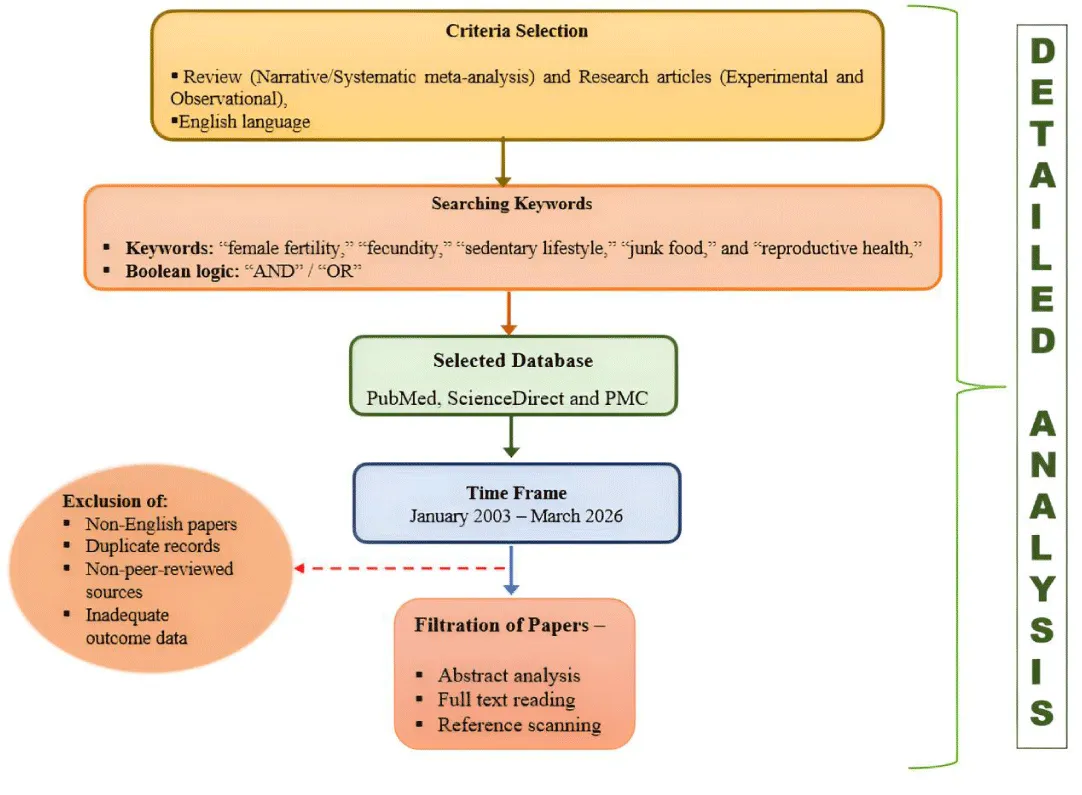
Panel 1— Study types included: The search intentionally targeted multiple study designs narrated in English: experimental (in vitro, animal), observational (cohort, case‑control, cross‑sectional), and review articles. Emphasis on peer‑reviewed publications increased confidence in methodological quality and reliability of reported findings. Both human clinical studies and mechanistic investigations were included to integrate clinical outcomes with underlying biological mechanisms.
Panel 2 — Search strategy and keywords: A comprehensive search strategy combined specific keywords — “female fertility,” “fecundity,” “sedentary lifestyle,” “junk food,” and “reproductive health” — using Boolean operators (AND, OR) to refine retrieval and capture both focused and related articles. The search was restricted to publications in English and spanned the period June 1998 to March 2026, permitting inclusion of foundational studies and recent advances.
Panel 3: Major scientific databases (PubMed, ScienceDirect, PubMed Central) were queried to ensure broad coverage of biomedical and life‑science literature. These sources capture peer‑reviewed primary research, reviews, and mechanistic studies relevant to reproductive health.
Left panel — Exclusion criteria duplicated records, non‑peer‑reviewed sources, and studies lacking adequate outcome data.
Panel 4 — Screening and inclusion criteria: Retrieved records were screened for relevance to the research question, methodological rigor (study design, sample size, controls), and clarity of outcomes. Inclusion criteria required English language and direct relevance to female reproductive outcomes or mechanistic pathways linking lifestyle/nutrition to fecundity.
Discussion
Reframing female infertility: beyond a linear model
Female infertility emerges through a complex interaction between endocrine imbalance, metabolic dysfunction, ovarian impairment, genetic susceptibility, and environmental influences. Among the different etiological contributors, ovulatory dysfunction remains one of the most dominant causes of infertility, with PCOS representing the principal metabolic–endocrine disorder associated with chronic anovulation, impaired folliculogenesis, menstrual irregularities, and reduced fecundity. The evidence presented throughout this review strongly indicates that infertility in PCOS is not merely confined to ovarian pathology; rather, it represents a systemic metabolic disorder involving insulin resistance, hyperandrogenism, chronic inflammation, oxidative stress, altered adipokine signalling, and micronutrient imbalance. At the molecular level, hyperinsulinemia acts as a central pathogenic trigger in PCOS-associated infertility. Increased insulin levels stimulate ovarian theca cells, resulting in excessive androgen biosynthesis while simultaneously suppressing hepatic synthesis of sex hormone-binding globulin (SHBG), thereby increasing circulating free androgen concentrations. This hyperandrogenic milieu disrupts granulosa cell aromatase activity, impairs follicular maturation, and culminates in follicular arrest and chronic anovulation. Altered gonadotropin dynamics, particularly dysregulated luteinizing hormone (LH) and follicle-stimulating hormone (FSH) secretion secondary to disrupted gonadotropin-releasing hormone (GnRH) pulsatility, further aggravate ovulatory failure [12,18,19,21-23,28,29].
The review additionally highlights that oxidative stress and chronic low-grade inflammation significantly contribute to reproductive dysfunction in PCOS. Increased generation of reactive oxygen species (ROS), mitochondrial dysfunction, and inflammatory mediators such as tumor necrosis factor alpha (TNF-a) and interleukin-6 (IL-6) impair ovarian microenvironment integrity and compromise oocyte quality. These inflammatory alterations interfere with insulin signalling pathways and steroidogenic balance, thereby reinforcing endocrine dysfunction. Furthermore, impaired mitochondrial oxidative capacity reduces adenosine triphosphate (ATP) generation within oocytes, negatively influencing oocyte competence and reproductive potential. An important mechanistic aspect emerging from this review is the intricate relationship between VDD and PCOS pathophysiology. Vitamin D, through vitamin D receptor (VDR)-mediated transcriptional regulation, modulates genes associated with steroidogenesis, insulin signalling, and ovarian physiology, including CYP19 and CYP17 pathways. The findings summarized in this article strongly support the concept that VDD aggravates insulin resistance, dyslipidemia, altered anthropometric indices, and endocrine imbalance in PCOS individuals. In addition, VDR gene polymorphisms, particularly FokI and BsmI variants, appear to modulate susceptibility and phenotypic heterogeneity of PCOS, emphasizing a significant gene–nutrient interaction axis in female infertility. The association between VDD, anti-Müllerian hormone (AMH), insulin resistance indices, and severity of PCOS manifestations further strengthens the role of vitamin D as both a biomarker and a potential therapeutic target. Consequently, infertility in PCOS should be interpreted as the result of continuous interactions among endocrine pathways, metabolic disturbances, micronutrient status, genetic predisposition, and environmental influences [21-25,29-37].
Sedentary lifestyle: Molecular driver, not just a risk factor
Physical activity: Metabolic, endocrine, and neurophysiological regulation of reproductive function
Regular physical activity plays a fundamental role in maintaining female reproductive health through its integrated effects on metabolic homeostasis, endocrine regulation, vascular physiology, and neuroendocrine balance. Exercise significantly improves insulin sensitivity, which is particularly important in women with metabolic disturbances such as PCOS, obesity, and insulin resistance-associated ovulatory dysfunction [38-42]. Improved insulin signalling reduces hyperinsulinemia-mediated ovarian androgen production, thereby lowering hyperandrogenism and restoring normal ovulatory cycles and follicular maturation [38-42]. In addition, physical activity promotes healthier body composition and reduces adiposity-related endocrine disturbances that adversely affect ovarian physiology and fertility potential [38-42]. Exercise also regulates gonadotropin dynamics by stabilizing the pulsatile secretion of GnRH, which is essential for balanced LH and FSH secretion during folliculogenesis [38-42]. Enhanced peripheral insulin sensitivity prevents excessive ovarian theca cell stimulation and reduces androgen biosynthesis, thereby improving granulosa cell activity and oocyte maturation [38-42]. Furthermore, exercise modulates adipokine signalling, particularly through increased adiponectin and improved leptin regulation, which contribute to anti-inflammatory effects, metabolic stability, and a healthier ovarian microenvironment [38-42].
At the molecular level, physical activity activates key metabolic pathways involved in cellular energy regulation and reproductive physiology. Exercise-induced activation of AMPK promotes fatty acid oxidation, improves glucose uptake, and enhances metabolic flexibility, thereby restoring endocrine balance and ovarian function [43,44]. Simultaneously, exercise stimulates eNOS, improving vascular function and ovarian blood circulation, which support follicular development, endometrial receptivity, and implantation potential [41,42,45,46]. Improved tissue perfusion additionally enhances oxygen and nutrient delivery to reproductive tissues, contributing to improved fertility outcomes. Physical activity further exerts protective effects through the regulation of oxidative stress and inflammatory pathways. Exercise promotes mitochondrial biogenesis via activation of peroxisome proliferator-activated receptor gamma coactivator-1 alpha (PGC-1α), thereby improving oxidative metabolism and reducing ROS accumulation [47,48]. Reduced oxidative stress preserves oocyte quality and follicular integrity. In parallel, regular exercise decreases pro-inflammatory cytokines such as TNF-α and IL-6 while enhancing anti-inflammatory mediators, thereby reducing chronic low-grade inflammation associated with infertility and metabolic dysfunction [49,50]. Improved insulin receptor phosphorylation and activation of phosphatidylinositol 3-kinase/protein kinase B (PI3K/Akt) signalling pathways further strengthen insulin responsiveness and ovarian metabolic regulation [51].
Physical activity and psychological benefits
Beyond metabolic and endocrine regulation, exercise significantly influences psychological and neuroendocrine health, both of which are closely linked with reproductive function. Infertility is frequently associated with anxiety, depression, stress, and reduced quality of life. Physical activity improves emotional well-being through exercise-induced release of endorphins and brain-derived neurotrophic factor (BDNF), which enhance mood, cognitive function, and stress resilience [45]. Regular exercise also reduces cortisol levels and normalizes hypothalamic–pituitary–adrenal axis (HPAA) activity, thereby counteracting stress-induced suppression of GnRH pulsatility and ovulatory dysfunction [33,40,52]. Furthermore, exercise enhances serotonergic and dopaminergic signalling, improving emotional regulation and reducing infertility-associated psychological burden [53,54]. Improved sleep quality and stabilization of circadian rhythms associated with regular physical activity additionally influence melatonin secretion, antioxidant defense, and hormonal synchronization essential for reproductive cyclicity and oocyte quality [55,56].
Experimental and clinical evidence supporting exercise in fertility improvement
Experimental, observational, and clinical studies consistently support the beneficial role of physical activity in improving female reproductive health and fertility outcomes [56-65]. Randomized controlled trials (RCTs) demonstrate that structured exercise interventions significantly improve ovulation rates, menstrual regularity, endocrine balance, and pregnancy outcomes, particularly among overweight women and individuals with PCOS [56-58]. Improved insulin sensitivity and reduction of hyperinsulinemia-driven androgen excess appear to be major mechanisms underlying restoration of ovulatory function in these populations [38-40]. Clinical investigations further indicate that exercise-mediated improvements in adiposity, inflammatory status, vascular function, and hormonal balance collectively enhance follicular development, endometrial receptivity, and implantation success [41,42]. Longitudinal lifestyle intervention studies also reveal that combining exercise with dietary modification produces superior improvements in insulin sensitivity, metabolic stability, ovulatory function, and reproductive outcomes compared with isolated interventions alone [60-65]. These findings strongly support the concept that reproductive dysfunction is closely linked with modifiable metabolic and lifestyle-associated factors. Experimental evidence additionally highlights the importance of exercise-induced mitochondrial adaptation and oxidative stress regulation in ovarian physiology. Enhanced mitochondrial function and reduced ROS accumulation improve oocyte competence and protect reproductive tissues from oxidative damage associated with obesity, insulin resistance, and chronic inflammation [47-50]. Studies examining molecular signalling pathways further demonstrate that exercise modulates AMPK and PI3K/Akt signalling, both of which are critically involved in steroidogenesis, glucose metabolism, follicular survival, and ovarian endocrine regulation [37-45] [43-51].
Psychological and neuroendocrine studies similarly support the beneficial impact of exercise on fertility. Reduction in stress, anxiety, and depressive symptoms following regular physical activity has been associated with improved HPOA regulation and restoration of reproductive endocrine balance [68-70]. Exercise-induced normalization of cortisol secretion and circadian rhythm stability may therefore indirectly enhance ovulatory function and fertility outcomes [33,40,55,56].
However, existing evidence also emphasizes that the reproductive effects of exercise follow a dose-dependent relationship. Moderate-intensity aerobic activity appears most beneficial, whereas excessive exercise, prolonged endurance training, or severe caloric restriction may induce hypothalamic suppression, luteal phase defects, and functional hypothalamic amenorrhea [59-61]. Energy deficiency states associated with excessive physical exertion disrupt GnRH pulsatility and ovarian hormonal regulation, ultimately impairing ovulation and fertility [60,61]. Variability in reproductive outcomes across studies further suggests that factors such as baseline body mass index (BMI), metabolic status, age, and hormonal profile significantly influence individual responses to exercise interventions [60-65].
Collectively, current evidence establishes physical activity as a major protective regulator of female reproductive health. Through coordinated metabolic, endocrine, inflammatory, vascular, mitochondrial, and neuropsychological mechanisms, regular moderate exercise improves ovarian physiology, hormonal balance, ovulation, implantation potential, and fertility outcomes. These findings reinforce the importance of individualized and precision-based lifestyle interventions in reproductive medicine, particularly for women affected by PCOS and lifestyle-associated metabolic dysfunction (Table 1) [56-65].
Junk food, fast food, and ultra-processed diets: impact on female reproductive health
Neuroendocrine, metabolic, and molecular disruption of reproductive function
Frequent consumption of junk food, fast food, and ready-to-eat ultra-processed diets has emerged as a major lifestyle-associated contributor to female reproductive dysfunction and infertility. These dietary patterns, characterized by excessive intake of refined sugars, saturated fats, trans fats, sodium, food additives, and calorie-dense nutrient-poor ingredients, profoundly disturb endocrine, metabolic, inflammatory, and neurophysiological pathways essential for normal reproductive function [66-72]. Evidence increasingly suggests that unhealthy dietary behaviour does not merely coexist with infertility-related disorders but actively participates in the pathogenesis of ovulatory dysfunction, menstrual irregularities, and PCOS-associated reproductive impairment [12,18,21-23,28]. One of the central mechanisms linking junk food consumption with infertility is the development of insulin resistance and chronic hyperinsulinemia. High glycaemic load diets induce repeated insulin surges that stimulate ovarian theca cells to produce excessive androgens while simultaneously suppressing hepatic synthesis of SHBG, thereby increasing circulating free androgen levels [12,18,21-23,28]. This hyperandrogenic environment disrupts follicular maturation, impairs granulosa cell function, and promotes follicular arrest and chronic anovulation, which are hallmark features of PCOS-associated infertility [12,18,21-23,28]. In addition, altered GnRH pulsatility and disruption of hypothalamic–pituitary–ovarian axis (HPOA) regulation further destabilize ovulatory cyclicity and menstrual function (Table 2) [66-68].
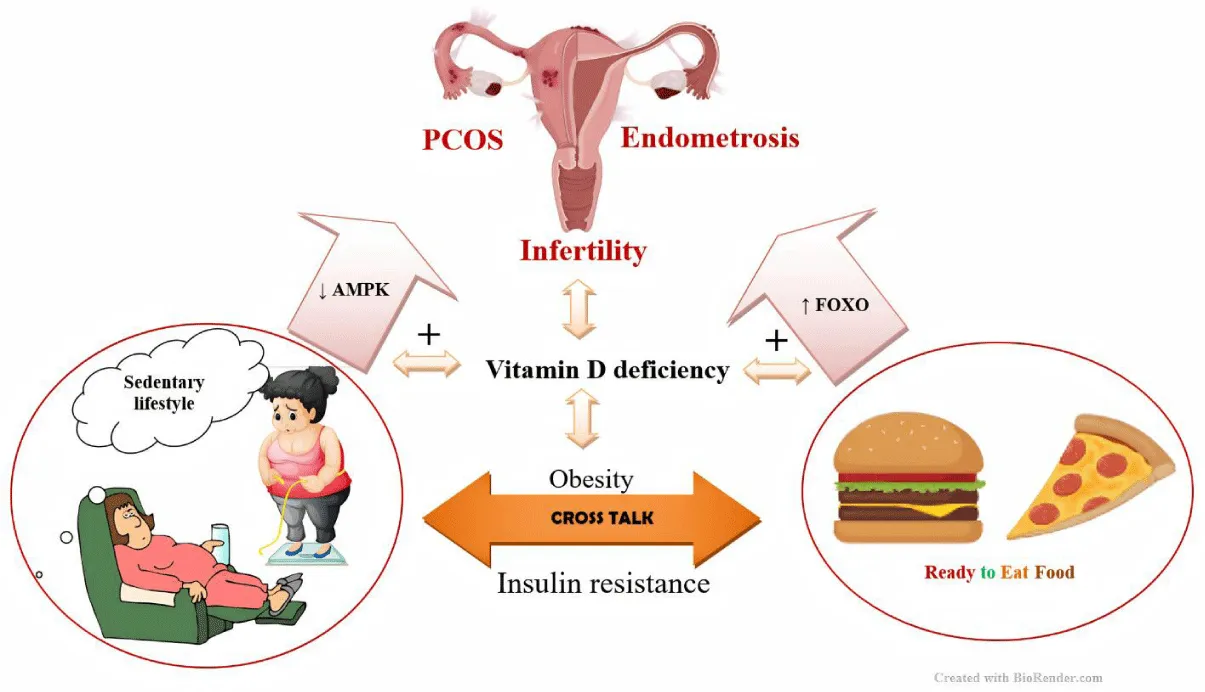
At the molecular level, junk food consumption profoundly alters nutrient-sensing and metabolic regulatory pathways involved in reproductive physiology. Excessive caloric intake and poor-quality diet dysregulate AMPK, mechanistic target of rapamycin (mTOR), forkhead box O (FOXO), and fibroblast growth factor 21 (FGF21) signalling pathways, all of which coordinate cellular metabolism, oxidative stress responses, aging, and ovarian function [73-78]. AMPK normally functions as a cellular energy sensor that promotes metabolic balance and preserves cellular integrity under low-energy conditions, whereas excessive nutrient availability and overactivation of mTOR signaling promote metabolic imbalance and ovarian dysfunction [76-78]. FOXO transcription factors play critical roles in oxidative stress resistance, apoptosis regulation, and maintenance of oocyte quality, while FGF21 contributes to systemic energy homeostasis and reproductive adaptation during metabolic stress [57-62] [73-78]. Dysregulation of these interconnected pathways disrupts the balance between metabolism and reproduction, thereby accelerating reproductive decline and infertility progression [76-78]. Chronic intake of ultra-processed food also promotes oxidative stress and systemic inflammation through accumulation of advanced glycation end-products (AGEs), lipid overload, and inflammatory activation [66-72,79-82]. Increased production of ROS damages ovarian tissues, impairs oocyte quality, and compromises follicular microenvironment integrity [34,35]. Simultaneously, visceral adiposity associated with unhealthy dietary behaviour acts as an endocrine organ that secretes pro-inflammatory cytokines such as TNF-a, IL-6, and resistin, which interfere with insulin receptor signalling and ovarian steroidogenesis [34,35,83,84]. This chronic inflammatory state aggravates endocrine dysfunction, hyperandrogenism, and ovulatory failure while reducing implantation success and fertility potential (Figure 2) [34,35,83,84].
Infertility and gut dysbiosis
Emerging evidence identifies gut microbiota dysbiosis as a major mechanistic link between unhealthy dietary behaviour, metabolic dysfunction, chronic inflammation, and female infertility [79-82]. Frequent consumption of junk food, fast food, and ultra-processed diets rich in saturated fats, refined sugars, artificial additives, and low-fiber content profoundly alters gut microbial diversity and composition, thereby disrupting intestinal metabolic homeostasis [79-82]. Such dietary patterns reduce beneficial microbial populations involved in short-chain fatty acid (SCFA) production while simultaneously promoting the proliferation of pro-inflammatory gram-negative bacteria. This microbial imbalance compromises intestinal barrier integrity by disrupting tight junction proteins, leading to increased intestinal permeability or “leaky gut” phenomenon [79-82]. Enhanced intestinal permeability facilitates translocation of lipopolysaccharides and other endotoxins into systemic circulation, resulting in metabolic endotoxemia and activation of chronic low-grade inflammatory pathways [79-82]. LPS-mediated activation of toll-like receptor-4 (TLR4) signalling stimulates nuclear factor kappa B (NF-kB)-dependent inflammatory cascades, increasing production of pro-inflammatory cytokines such as TNF-a, IL-6, and interleukin-1b (IL-1b) [79-82]. These inflammatory mediators interfere with insulin receptor signalling pathways, aggravating insulin resistance and hyperinsulinemia, which are central pathogenic mechanisms underlying PCOS-associated infertility and ovulatory dysfunction [79-82]. Hyperinsulinemia further stimulates ovarian theca cells to enhance androgen biosynthesis while suppressing hepatic SHBG synthesis, thereby increasing free androgen concentrations and promoting follicular arrest and chronic anovulation.
Gut dysbiosis additionally affects reproductive endocrinology through modulation of estrogen metabolism and enterohepatic circulation. Altered microbial b-glucuronidase activity influences estrogen deconjugation and reabsorption, thereby disrupting circulating estrogen levels and hormonal homeostasis essential for folliculogenesis, ovulation, and endometrial receptivity [79-82]. Disturbed gut microbial composition may also impair synthesis of essential metabolites involved in neurotransmitter regulation, including serotonin, dopamine, and gamma-aminobutyric acid (GABA), thereby indirectly influencing HPOA regulation and GnRH pulsatility [79-82]. At the ovarian level, chronic systemic inflammation and oxidative stress associated with dysbiosis compromise follicular microenvironment integrity and oocyte competence. Increased ROS generation impairs mitochondrial function within ovarian cells, reducing ATP production required for oocyte maturation and embryonic development [79-82]. Inflammatory cytokines additionally disrupt granulosa cell steroidogenesis and follicular signalling pathways, thereby impairing ovulation and implantation potential. Dysbiosis-associated metabolic disturbances also alter adipokine secretion, particularly leptin and adiponectin signalling, further aggravating endocrine imbalance and reproductive dysfunction. Another critical aspect involves the role of endocrine-disrupting chemicals, food preservatives, emulsifiers, artificial sweeteners, and trans fats commonly present in ultra-processed foods [79-82]. These compounds may directly interfere with hormone receptor signalling, steroidogenic enzyme activity, and epigenetic regulation of reproductive genes. Experimental studies suggest that such dietary components influence DNA methylation, histone modification, and microRNA expression associated with metabolic regulation, inflammation, and ovarian physiology [79-82]. Furthermore, disturbed circadian eating behaviour frequently associated with fast food consumption disrupts hormonal synchronization involving LH, cortisol, and melatonin secretion, thereby destabilizing menstrual cyclicity and reproductive endocrine regulation [69,70,72].
Collectively, current molecular and experimental evidence strongly supports gut dysbiosis as a central mediator linking unhealthy dietary patterns with infertility, PCOS progression, chronic inflammation, oxidative stress, and endocrine dysfunction. These findings highlight the potential therapeutic significance of microbiota-targeted nutritional interventions, dietary modification, and restoration of intestinal metabolic homeostasis in improving female reproductive health and fertility outcomes [79-82].
Experimental and clinical evidence linking unhealthy diets with infertility
Experimental, epidemiological, and clinical studies consistently demonstrate a strong association between unhealthy dietary patterns and adverse reproductive outcomes [12,18,21-23,28,66-72]. Observational studies indicate that women with frequent consumption of junk food and fast food exhibit higher prevalence of menstrual irregularities, dysmenorrhea, oligomenorrhea, premenstrual syndrome, obesity, and PCOS-associated infertility [12,18,21-23,28]. Diets rich in refined carbohydrates and trans fats have also been associated with reduced ovulatory fertility and impaired endocrine balance [87,88]. Clinical evidence further suggests that regular intake of ultra-processed foods increases the risk of insulin resistance, dyslipidemia, obesity, and metabolic syndrome, all of which adversely affect ovarian physiology and reproductive competence [83,84]. Elevated triglycerides, reduced high-density lipoprotein (HDL) levels, and ectopic lipid accumulation impair endothelial function and ovarian blood flow, thereby negatively influencing follicular development, fertilization, and implantation processes [34,35]. Studies additionally report that women consuming fast food more than once daily experience significantly higher infertility risk and poorer reproductive outcomes compared with individuals following balanced dietary practices [66-72].
Epidemiological studies in adolescents and young women indicate that excessive junk food consumption may contribute to earlier onset of menarche, which is associated with long-term endocrine and metabolic consequences including increased risk of PCOS and infertility later in life [12,18,21-23,28]. Experimental studies also reveal that diets high in saturated fats and refined sugars alter prostaglandin metabolism, particularly increasing pro-inflammatory prostaglandin F2α (PGF2α), thereby contributing to uterine hypercontractility, dysmenorrhea, and menstrual disturbances [69,85]. Importantly, several interventional and nutritional studies demonstrate that dietary modification can improve reproductive outcomes by restoring metabolic and endocrine homeostasis [66-72]. Balanced diets enriched with antioxidants, fiber, omega-3 fatty acids, vitamins, and micronutrients improve insulin sensitivity, reduce oxidative stress, and support ovarian function [86,87]. Dietary restriction and nutritional optimization further activate protective metabolic pathways involving FOXO and AMPK signalling, thereby improving mitochondrial function, reducing inflammatory burden, and preserving ovarian reserve [75,76,88].
However, variability in study design, dietary assessment methods, and population characteristics limits direct comparison across studies [86,87]. Despite these limitations, current evidence strongly supports the concept that junk food and ultra-processed dietary patterns represent significant modifiable risk factors for female reproductive dysfunction. Collectively, the available experimental and clinical findings reinforce the importance of dietary regulation, nutritional awareness, and lifestyle-based interventions as central preventive and therapeutic strategies for improving fertility outcomes and reproductive health in women [12,18,21-23,28,86,87].
PCOS: A nexus of lifestyle–genetic interaction
The multidimensional metabolic, endocrine, inflammatory, and reproductive disturbances associated with PCOS strongly support the recently proposed nomenclature shift toward “Polyendocrine Metabolic Ovarian Syndrome (PMOS),” which more accurately reflects the systemic nature of the disorder rather than limiting it to ovarian morphology alone. The findings discussed in this review demonstrate that insulin resistance, chronic inflammation, vitamin D deficiency, adipokine imbalance, and lifestyle-associated metabolic dysfunction collectively contribute to reproductive impairment, emphasizing the broader metabolic complexity underlying the syndrome. Furthermore, the beneficial impact of healthy dietary practices and regular physical activity on endocrine, metabolic, and reproductive homeostasis reinforces the concept that PMOS is fundamentally a multisystem metabolic–reproductive disorder influenced by modifiable lifestyle factors. Exercise-induced activation of AMPK promotes fatty acid oxidation, improves glucose uptake through enhanced GLUT4 expression, and restores metabolic balance. These changes contribute to normalization of ovarian steroidogenesis, improved follicular maturation, and restoration of ovulatory cycles. Exercise additionally stimulates eNOS activity, improving vascular function and blood circulation to reproductive tissues. Enhanced ovarian perfusion supports follicular development and endometrial receptivity, thereby improving implantation potential and pregnancy outcomes. At the molecular level, physical activity promotes mitochondrial biogenesis through activation of PGC-1α, enhancing oxidative metabolism and reducing ROS accumulation. Exercise also suppresses inflammatory pathways by reducing TNF-α and IL-6 levels while increasing anti-inflammatory mediators. Improved insulin receptor phosphorylation and activation of PI3K/Akt pathways further restore insulin signalling and ovarian function. An equally important aspect highlighted in this review is the neuroendocrine and psychological benefit of exercise. Physical activity modulates HPAA activity, reduces cortisol levels, improves serotonergic and dopaminergic signalling, and enhances release of endorphins and BDNF. These neuropsychological improvements reduce infertility-associated stress and indirectly restore reproductive endocrine balance [18,19,21-29,38-65].
Evidence summarized in this review consistently indicates that moderate-intensity exercise improves ovulation rates, menstrual regularity, hormonal balance, and pregnancy outcomes, particularly in overweight and PCOS populations. However, the review also acknowledges that excessive exercise and severe caloric restriction may induce hypothalamic suppression and anovulation, emphasizing the need for balanced and individualized physical activity recommendations. Healthy dietary habits similarly exert protective effects on reproductive physiology by restoring metabolic and endocrine homeostasis. Nutrient-dense and balanced diets improve insulin sensitivity, reduce inflammation, and provide essential micronutrients required for oocyte maturation, hormonal synthesis, antioxidant defense, and reproductive tissue integrity. Dietary interventions modulate nutrient-sensing pathways including FOXO, mTOR, and AMPK, thereby promoting mitochondrial function, cellular repair, oxidative stress resistance, and preservation of ovarian reserve. Caloric optimization and balanced nutrition improve metabolic signalling and create a favourable endocrine environment for ovulation, fertilization, and implantation. The review further emphasizes that combined lifestyle interventions involving structured exercise, healthy dietary modification, micronutrient optimization, and weight regulation yield superior reproductive outcomes compared with isolated interventions. Such integrated approaches improve insulin sensitivity, reduce hyperandrogenism, normalize menstrual cyclicity, and enhance fertility potential [56-65,73-78,88].
Genetic roots of infertility
Chromosomal abnormalities
Chromosomal abnormalities, including monosomy X and structural rearrangements, play a critical role in female infertility. These defects lead to premature depletion of primordial oocytes and impaired ovarian development. Such abnormalities often result in primary ovarian insufficiency and a reduced reproductive lifespan [89,90]. At a deeper level, chromosomal anomalies disrupt meiotic pairing and segregation, leading to genomic instability and increased oocyte apoptosis during fetal development. In conditions such as Turner syndrome (45,X), haploinsufficiency of X-linked genes essential for ovarian maintenance accelerates follicular atresia [89,90]. Structural abnormalities, including translocations and deletions, may impair genes involved in DNA repair, synapsis, and recombination, further compromising oocyte viability. Additionally, chromosomal mosaicism can result in variable phenotypic expression, complicating diagnosis and prognosis. These genetic disruptions ultimately reduce the ovarian reserve and impair reproductive competence at both developmental and functional levels [89,90].
X-linked gene dysregulation
Several X-linked genes are essential for normal ovarian function and reproductive development. Mutations or dysregulation of genes such as methyl-CpG binding protein 2 (MECP2) and filamin A, alpha (FLNA) can disrupt cellular processes, leading to infertility. These genetic alterations highlight the importance of genomic integrity in maintaining reproductive health [91,92]. Expanding further, X-linked genes play crucial roles in folliculogenesis, steroidogenesis, and cellular signalling pathways [91,92]. Dysregulation of genes involved in chromatin remodelling, transcriptional control, and cytoskeletal organization affects granulosa cell function and oocyte maturation. For instance, MECP2 influences epigenetic regulation through DNA methylation, while FLNA is involved in cytoskeletal integrity and signal transduction. Abnormal XCI patterns can also lead to skewed gene expression, further exacerbating ovarian dysfunction. Emerging evidence suggests that mutations in additional X-linked genes, such as bone morphogenetic protein 15 (BMP15) and fragile X messenger ribonucleoprotein 1 (FMR1) permutations contribute to ovarian insufficiency, reinforcing the role of gene dosage and epigenetic regulation in reproductive biology [106-109] [91-94].
Germ cell depletion mechanisms
Accelerated loss of germ cells is a key factor in infertility and is often associated with defective signaling between oocytes and surrounding granulosa cells. Impaired cellular communication leads to follicular atresia and reduced ovarian reserve. Understanding these mechanisms is essential for developing targeted therapeutic interventions [95,96]. Mechanistically, germ cell depletion is driven by apoptotic pathways, oxidative stress, and disrupted intraovarian signalling networks. Key signalling pathways such as PI3K-Akt, transforming growth factor-β (TGF-β), and proto-oncogene, KIT ligand pathways regulate follicular survival and activation; their dysregulation leads to premature follicle activation or atresia [95,96]. Mitochondrial dysfunction within oocytes further exacerbates cellular damage by increasing ROSs production and reducing ATP availability [95,96]. Additionally, impaired gap junction communication between oocytes and granulosa cells disrupts nutrient and signal exchange, compromising follicular development. Environmental stressors and genetic predispositions together accelerate depletion of the follicular pool, ultimately reducing reproductive lifespan [95,96].
Effects of vitamin D deficiency, insufficiency, and VDR polymorphisms on female reproductive health
Beyond its classical role in calcium homeostasis, vitamin D functions as a pleiotropic secosteroid hormone regulating multiple reproductive, metabolic, inflammatory, and cellular signalling pathways critical for ovarian physiology [18,19,21-25]. The biologically active form of vitamin D, 1,25-dihydroxyvitamin D₃ [1,25(OH)₂D₃], exerts its genomic effects through binding to the VDR, a ligand-activated nuclear transcription factor expressed in ovarian granulosa cells, theca cells, endometrial tissue, placenta, pituitary gland, and hypothalamic regions involved in reproductive regulation [18,19,21-25]. Following ligand binding, the VDR heterodimerizes with retinoid X receptor (RXR) and interacts with vitamin D response elements (VDREs) within promoter regions of target genes, thereby modulating transcriptional activity associated with steroidogenesis, folliculogenesis, insulin signalling, inflammation, and cellular differentiation.The cumulative molecular disturbances associated with VDD, vitamin D insufficiency (VDI), and VDR polymorphisms exert profound effects on female reproductive physiology by disrupting ovarian, metabolic, immunological, mitochondrial, and gut-microbiota-associated pathways [18,19,21-28,79-82]. At the ovarian level, impaired vitamin D signalling compromises follicular recruitment, granulosa cell proliferation, oocyte maturation, and steroid hormone synthesis, thereby increasing the risk of chronic anovulation, follicular arrest, diminished ovarian reserve, and infertility progression [18,19,21-28]. Altered regulation of CYP19A1-mediated aromatase activity, AMH signalling, and FSH receptor (FSHR) responsiveness further destabilizes estrogen–androgen balance, contributing to hyperandrogenism and PCOS/PMOS-associated reproductive dysfunction [19,21-25]. VDD additionally aggravates insulin resistance, adipokine imbalance, obesity, and chronic inflammatory activation, thereby creating a hostile endocrine milieu unfavourable for ovulation, fertilization, implantation, and embryonic development [18,19,21-28]. Reduced vitamin D-mediated activation of PI3K/Akt signaling impairs insulin receptor phosphorylation and glucose metabolism, resulting in hyperinsulinemia-driven ovarian androgen excess [21-25]. Simultaneously, oxidative stress and mitochondrial dysfunction associated with impaired vitamin D signalling reduce ATP generation required for spindle formation, chromosomal stability, and oocyte competence [21-25]. Increased ROS accumulation further promotes granulosa cell apoptosis, follicular atresia, and premature ovarian aging.
Emerging evidence now strongly suggests that vitamin D also functions as an important regulator of gut microbiota composition and intestinal immune homeostasis, thereby linking VDD with gut dysbiosis-associated infertility [79-82]. Vitamin D signalling through VDR regulates intestinal epithelial barrier integrity, tight junction protein expression, mucosal immunity, and microbial diversity. Deficiency states impair gut barrier function, resulting in increased intestinal permeability or “leaky gut,” which facilitates translocation of lipopolysaccharides and endotoxins into systemic circulation [79-82]. This metabolic endotoxemia activates TLR4 and NF-κB-mediated inflammatory pathways, increasing circulating pro-inflammatory cytokines such as TNF-α, IL-6, and IL-1β [79-82]. Chronic systemic inflammation further worsens insulin resistance, oxidative stress, and ovarian steroidogenic dysfunction, thereby aggravating infertility and PCOS/PMOS severity. VDD-associated gut dysbiosis may additionally influence reproductive endocrinology through altered microbial estrogen metabolism and enterohepatic circulation. Disruption of gut microbial β-glucuronidase activity affects estrogen deconjugation and reabsorption, thereby disturbing circulating estrogen levels essential for folliculogenesis, ovulation, and endometrial receptivity [79-82]. Altered gut microbial composition also affects synthesis of neurotransmitter precursors and SCFAs, which regulate HPOA signalling, GnRH pulsatility, and neuroendocrine homeostasis [79-82]. Consequently, gut dysbiosis associated with VDD may indirectly impair ovulatory cyclicity, menstrual regulation, and implantation potential.
At the endometrial and implantation level, impaired vitamin D signalling may disrupt decasualisation, angiogenesis, immune tolerance, and cytokine-mediated uterine receptivity [18,19,21-25]. Reduced VDR-mediated transcriptional activity affects genes involved in placental development and embryo implantation, potentially increasing the risk of implantation failure, recurrent pregnancy loss, and adverse reproductive outcomes. Furthermore, VDR polymorphisms such as FokI and BsmI may modify intestinal VDR expression, microbial interaction, inflammatory responsiveness, and systemic vitamin D bioavailability, thereby influencing individual susceptibility to metabolic and reproductive dysfunction [21-25].
Collectively, current molecular evidence suggests that vitamin D deficiency, VDR polymorphisms, oxidative stress, mitochondrial dysfunction, and gut dysbiosis form an interconnected pathogenic network influencing ovarian physiology, endocrine balance, immune regulation, metabolic homeostasis, and reproductive competence [18,19,21-28,79-82]. These findings strongly reinforce the importance of gene–nutrient–microbiome interactions in female infertility and highlight the therapeutic potential of vitamin D optimization, microbiota-targeted nutritional interventions, and metabolic regulation in improving reproductive health outcomes.
Future perspective: From association to Precision-Based reproductive intervention
The evidence synthesized throughout this review strongly establishes female infertility as a systems-level metabolic–endocrine disorder arising from continuous interactions among genetic susceptibility, endocrine imbalance, metabolic dysfunction, micronutrient deficiency, environmental exposure, and lifestyle behavior. Among the major contributors, PCOS/PMOS emerges as one of the most significant infertility-associated conditions characterized by insulin resistance, hyperandrogenism, chronic inflammation, oxidative stress, mitochondrial dysfunction, and impaired folliculogenesis [12,18-29,34,35,73-78,83,84,86,87]. The interconnected influence of junk food consumption, sedentary lifestyle, gut dysbiosis, and vitamin D deficiency further highlights that reproductive dysfunction cannot be interpreted solely within the boundaries of ovarian pathology, but rather as a multisystem metabolic disorder profoundly shaped by modifiable environmental and nutritional factors. The future of reproductive medicine must therefore advance beyond associative observations toward mechanistically driven, precision-based, and translational frameworks. Large-scale longitudinal and multi-omics studies integrating genomics, epigenomics, metabolomics, transcriptomics, and microbiome profiling are urgently required to decode the complex molecular networks linking lifestyle-associated metabolic dysfunction with infertility progression. Such approaches may facilitate identification of predictive biomarkers for early detection, risk stratification, disease progression, and individualized therapeutic targeting [12,18-29,34,35,73-78,83,84,86,87].
Future research should particularly prioritize gene–environment and gene–nutrient interaction models involving vitamin D signalling, VDR polymorphisms, insulin resistance pathways, oxidative stress regulators, inflammatory mediators, and nutrient-sensing networks such as AMPK, mTOR, FOXO, and PI3K/Akt pathways. These mechanistic insights will strengthen the development of nutrigenomics-based and lifestyle-oriented precision medicine strategies for infertility and PCOS/PMOS management. Equally important is the need for well-designed randomized controlled trials evaluating integrated lifestyle interventions combining structured physical activity, dietary optimization, micronutrient supplementation, circadian regulation, and behavioural therapy. Considering the marked heterogeneity across metabolic phenotypes, genetic backgrounds, and socio-cultural environments, future reproductive healthcare must increasingly adopt individualized and personalized intervention models rather than uniform therapeutic protocols [12,18-29,34,35,73-78,83,84,86,87].
Emerging technologies including artificial intelligence-driven predictive analytics, wearable metabolic monitoring systems, and digital reproductive health platforms should also be incorporated into fertility management to enable continuous lifestyle surveillance and real-time therapeutic modulation. From a broader public health perspective, infertility should be recognized as a lifestyle-linked non-communicable disorder requiring preventive policy-level interventions emphasizing nutritional awareness, physical activity, environmental safety, early metabolic screening, and reproductive health education. Such integrative and preventive strategies may substantially reduce the growing global burden of infertility while improving long-term reproductive and metabolic health outcomes in women [43-51,38-42,52-65].
Conclusion
Female infertility can no longer be viewed through a fragmented lens of isolated endocrine or structural abnormalities; rather, it must be recognized as a systems-level disorder governed by the dynamic interplay of genetic, molecular, metabolic, and lifestyle determinants. The present synthesis unequivocally establishes that sedentary behaviour and unhealthy dietary patterns are not peripheral influences but central drivers of reproductive dysfunction, operating through IR, chronic inflammation, oxidative stress, and endocrine disruption. These pathways converge on critical regulatory axes—including the HPOA, adipokine signalling, and nutrient-sensing networks—ultimately impairing ovulation, oocyte quality, and implantation potential. Importantly, the interaction between intrinsic factors such as chromosomal integrity, gene regulation, and ovarian reserve with extrinsic modulators like physical inactivity and nutrient imbalance defines the phenotypic expression and severity of infertility. Conditions such as PCOS exemplify this convergence, where metabolic dysregulation, micronutrient deficiencies (notably vitamin D), and genetic susceptibility collectively shape reproductive outcomes. Thus, infertility should be redefined not merely as a reproductive disorder but as a metabolic–endocrine continuum influenced by modifiable lifestyle behaviours. This paradigm mandates a decisive shift in both clinical and research approaches—from reactive treatment strategies to preventive, integrative, and systems-based interventions. Lifestyle optimization is not an adjunct but a primary therapeutic axis, capable of restoring physiological equilibrium and enhancing reproductive potential. The evidence presented herein compels clinicians, researchers, and public health systems to reposition lifestyle as a cornerstone in the management and prevention of female infertility.
In essence, the next frontier lies in transforming our understanding of infertility from a condition to be treated into a biological state to be predicted, prevented, and precisely modulated.
- Akalewold M, Yohannes GW, Abdo ZA, Hailu Y, Negesse A. Magnitude of infertility and associated factors among women attending selected public hospitals in Addis Ababa, Ethiopia: a cross-sectional study. BMC Womens Health. 2022;22(1):1-11. Available from: https://doi.org/10.1186/s12905-022-01601-8
- Alexander SE, Pollock AC, Lamon S. The effect of sex hormones on skeletal muscle adaptation in females. Eur J Sport Sci. 2022;22(7):1035-1045. Available from: https://doi.org/10.1080/17461391.2021.1921854
- Jeon B, Kang T, Choi SW. Lifestyle factors and health outcomes associated with infertility in women: A case-control study using National Health Insurance Database. Reprod Health. 2025;22(1):1-10. Available from: https://doi.org/10.1186/s12978-025-02030-0
- World Health Organization (WHO). Infertility prevalence estimates, 1990–2021 [Internet]. 2023. Available from: https://www.who.int/publications/i/item/978920068315
- Lee TH, Nicolas JC, Quarta C. Molecular and functional mapping of the neuroendocrine hypothalamus: a new era begins. J Endocrinol Invest. 2024;47(11):2627-2648. Available from: https://doi.org/10.1007/s40618-024-02411-5
- Aitken RJ. What is driving the global decline of human fertility? Need for a multidisciplinary approach to the underlying mechanisms. Front Reprod Health. 2024;6:1-17. Available from: https://doi.org/10.3389/frph.2024.1364352
- Lee CY, Moawad K, Pien GW. Impact of night shift work on women's fertility, pregnancy and menopause. Front Sleep. 2025;4:1-9. Available from: https://doi.org/10.3389/frsle.2025.1545258
- Vannucchi G, Amato C, Rotondi M, Persani L, Bagnasco M, Elisei R. Thyroid and female fertility: a survey on the clinical practice among endocrinologists belonging to the Italian Thyroid Association. J Endocrinol Invest. 2025;48(8):1903-1907. Available from: https://doi.org/10.1007/s40618-025-02613-5
- Siegel EL, Ghassabian A, Hipwell AE, Factor-Litvak P, Zhu Y, et al. Indoor and outdoor air pollution and couple fecundability: a systematic review. Hum Reprod Update. 2023;29(1):45-70. Available from: https://doi.org/10.1093/humupd/dmac029
- Favaro C, Pearson JT, Rowland SP, Jukic AM, Chelstowska M, et al. Time to pregnancy for women using a fertility awareness based mobile application to plan a pregnancy. J Womens Health (Larchmt). 2021;30(11):1538-1545. Available from: https://doi.org/10.1089/jwh.2021.0026
- Silva ABP, Carreiró F, Ramos F, Sanches-Silva A. The role of endocrine disruptors in female infertility. Mol Biol Rep. 2023;50(8):7069-7088. Available from: https://doi.org/10.1007/s11033-023-08583-2
- Chakraborty S, Samaddar A, Das N, Saha SK, Basu BR. An insight of association of insulin resistance with polycystic ovary syndrome. Indian J Clin Anat Physiol. 2021;8(4):248-254. Available from: https://doi.org/10.18231/j.ijcap.2021.055
- Adebisi OY, Singh M, Tobler KJ. Female Infertility [Internet]. Treasure Island (FL): StatPearls Publishing; 2026 Jan-. [Updated 2025 Nov 30]. Available from: https://www.ncbi.nlm.nih.gov/books/NBK556033/
- Gonnella F, Konstantinidou F, Di Berardino C, Capacchietti G, Peserico A, et al. A systematic review of the effects of high-fat diet exposure on oocyte and follicular quality: a molecular point of view. Int J Mol Sci. 2022;23(16):1-15. Available from: https://doi.org/10.3390/ijms23168890
- Peng Z, Yang R, Liu Q, Chen B, Long P. X chromosome rearrangement associated with premature ovarian insufficiency as diagnosed by molecular cytogenetic methods: a case report and review of the literature. Mol Cytogenet. 2024;17(1):7:1-8. Available from: https://doi.org/10.1186/s13039-024-00676-2
- Han S, Li X, Liu W, Chi Y, Jiajue R, Fu Z, et al. The genetic polymorphism of XPR1 associated with Fanconi syndrome in Chinese patients with X-linked hypophosphatemia. J Endocrinol Invest. 2025;48(12):2869-2878. Available from: https://doi.org/10.1007/s40618-025-02678-2
- Mazza E, Troiano E, Ferro Y, Lisso F, Tosi M, et al. Obesity, dietary patterns, and hormonal balance modulation: gender-specific impacts. Nutrients. 2024;16(11):1-28. Available from: https://doi.org/10.3390/nu16111629
- Basu BR, Chakraborty S, Saha SK, Das N. Evaluation of association of anthropometric indices with stress response in PCOS population. Int J Sci Res. 2020;9(10):79-83. Available from: doi:10.36106/ijsr
- Basu BR, Chakraborty S, Samaddar A, Pal R, Saha SK, et al. Vitamin D and pathophysiology of polycystic ovary syndrome: a case-control study. J Diabetol. 2023;14(2):84-89. Available from: https://journals.lww.com/jodb/fulltext/2023/14020/vitamin_d_and_pathophysiology_of_polycystic_ovary.4.aspx
- Lin Y, Zeng H, Lin J, Peng Y, Que X, Wang L, et al. Evaluating the therapeutic potential of moxibustion on polycystic ovary syndrome: a rat model study on gut microbiota and metabolite interaction. Front Cell Infect Microbiol. 2024;14:1-15. Available from: https://doi.org/10.3389/fcimb.2024.1328741
- Chakraborty S, Pal R, Begum F, Naskar TK, Das N, et al. Vitamin D deficiency and VDR gene variants in polycystic ovary syndrome: a case-control study. Reprod Sci. 2025;32(11):3750-3769. Available from: https://doi.org/10.1007/s43032-025-01991-8
- Chakraborty S, Naskar TK, Basu BR. Vitamin D deficiency, insulin resistance, and antimüllerian hormone level: a tale of trio in the expression of polycystic ovary syndrome. F S Sci. 2024;5(3):252-264. Available from: https://doi.org/10.1016/j.xfss.2024.06.002
- Chakraborty S, Naskar TK, Basu BR. Vitamin D deficiency–A silent threat in expression of polycystic ovary syndrome: A case-control study. Indian J Physiol Allied Sci. 2025;77(02):14-20. Available from: https://ijpas.org/index.php/ijpas/article/view/292
- Mallick P, Chakraborty S, Pal R, Samaddar A, Saha SK, Basu BR. Readdressing pathophysiology of polycystic ovary syndrome in post-COVID new normal era: a pilot study. BOHR Int J Gynaecol. 2023;2:1-9. Available from: https://doi.org/10.54646/bijg.2023.01
- Albahlol IA, Neamatallah M, Serria MS, El-Gilany AH, Setate YA, Alkasaby NM, et al. Vitamin D receptor gene polymorphism and polycystic ovary syndrome susceptibility. BMC Med Genomics. 2023;16(1):1-9. Available from: https://doi.org/10.1186/s12920-023-01541-8
- Mirzaei P, Eslamian G, Sohouli MH, Tadayoni ZS. The impact of vitamin D supplementation on anti-Müllerian hormone levels: a systematic review and meta-analysis. BMC Endocr Disord. 2025;26(1):1-10. Available from: https://doi.org/10.1186/s12902-025-02143-4
- Kerkadi A, Raïq H, Prince MS, Bader L, Soltani A, Agouni A. A cross-sectional analysis of zinc and copper levels and their relationship to cardiovascular disease risk markers in Qatar biobank participants. Front Cardiovasc Med. 2024;10:1-18. Available from: https://doi.org/10.3389/fcvm.2023.1305588
- Basu BR, Chowdhury O, Saha SK. Possible link between stress-related factors and altered body composition in women with polycystic ovarian syndrome. J Hum Reprod Sci. 2018;11(1):10-18. Available from: https://doi.org/10.4103/jhrs.jhrs_78_17
- Sørensen AE, Wissing ML, Salö S, Englund AL, Dalgaard LT. MicroRNAs related to polycystic ovary syndrome (PCOS). Genes (Basel). 2014;5(3):684-708. Available from: https://doi.org/10.3390/genes5030684
- Song J, Xiao L, Zhang Z, Wang Y, Kouis P, Rasmussen LJ, et al. Effects of reactive oxygen species and mitochondrial dysfunction on reproductive aging. Front Cell Dev Biol. 2024;12:1-12. Available from: https://doi.org/10.3389/fcell.2024.1347286
- Lei R, Chen S, Li W. Advances in the study of the correlation between insulin resistance and infertility. Front Endocrinol (Lausanne). 2024;15:1-11. Available from: https://doi.org/10.3389/fendo.2024.1288326
- Trim WV, Walhin JP, Koumanov F, Bouloumié A, Lindsay MA, et al. The impact of long-term physical inactivity on adipose tissue immunometabolism. J Clin Endocrinol Metab. 2022;107(1):177-191. Available from: https://doi.org/10.1210/clinem/dgab647
- Ignatiuk VM, Sharova VS, Zakharova LA. The role of cytokines in the development and functioning of the hypothalamic-pituitary-gonadal axis in mammals in normal and pathological conditions. Int J Mol Sci. 2025;26(22):1-28. Available from: https://doi.org/10.3390/ijms262211057
- Ellulu MS, Patimah I, Khaza'ai H, Rahmat A, Abed Y. Obesity and inflammation: the linking mechanism and the complications. Arch Med Sci. 2017;13(4):851-863. Available from: https://doi.org/10.5114/aoms.2016.58928
- Davis JS. Connecting female infertility to obesity, inflammation, and maternal gut dysbiosis. Endocrinology. 2016;157(5):1725-1727. Available from: https://doi.org/10.1210/en.2016-1198
- Iavarone I, Mele D, Caprio F, Andreoli G, Vastarella MG, de Franciscis P, et al. Obesity may impair response to ovarian stimulation. A retrospective observational study on oocyte quality. Front Cell Dev Biol. 2024;12:1-7. Available from: https://doi.org/10.3389/fcell.2024.1461132
- Chen X, Xiao Z, Cai Y, Huang L, Chen C. Hypothalamic mechanisms of obesity-associated disturbance of hypothalamic-pituitary-ovarian axis. Trends Endocrinol Metab. 2022;33(3):206-217. Available from: https://doi.org/10.1016/j.tem.2021.12.004
- Sabag A, Patten RK, Moreno-Asso A, Colombo GE, Dafauce Bouzo X, Moran LJ, et al. Exercise in the management of polycystic ovary syndrome: a position statement from Exercise and Sports Science Australia. J Sci Med Sport. 2024;27(10):668-677. Available from: https://doi.org/10.1016/j.jsams.2024.05.015
- Patten RK, Boyle RA, Moholdt T, Kiel I, Hopkins WG, Harrison CL, et al. Exercise interventions in polycystic ovary syndrome: a systematic review and meta-analysis. Front Physiol. 2020;11:1-17. Available from: https://doi.org/10.3389/fphys.2020.00606
- Safari M, Farahbakht E, Sharifabadi A, Sepehri H, Jahromi MK. The effect of two types of exercise conditioning on hypothalamic corticotropin-releasing hormone (CRH) and gonadotropin-releasing hormone (GNRH) gene expression response to acute noise stress in rats. BMC Res Notes. 2025;18(1):1-10. Available from: https://doi.org/10.1186/s13104-025-07365-2
- Becic T, Studenik C, Hoffmann G. Exercise increases adiponectin and reduces leptin levels in prediabetic and diabetic individuals: systematic review and meta-analysis of randomized controlled trials. Med Sci (Basel). 2018;6(4):1-18. Available from: https://doi.org/10.3390/medsci6040097
- Jiang Z, Hua Y, Deng L, Li Y, Xu S, Li M, et al. Effect of zero-time exercise intervention on endometrial receptivity in women with thin endometrium: a single-center randomized sham-controlled trial. Arch Gynecol Obstet. 2026;313(1):1-11. Available from: https://doi.org/10.1007/s00404-026-08385-4
- Coven DL, Hu X, Cong L, Bergeron R, Shulman GI, Hardie DG, et al. Physiological role of AMP-activated protein kinase in the heart: graded activation during exercise. Am J Physiol Endocrinol Metab. 2003;285(3):E629-E636. Available from: https://doi.org/10.1152/ajpendo.00171.2003
- Małkowska P. Positive effects of physical activity on insulin signaling. Curr Issues Mol Biol. 2024;46(6):5467-5487. Available from: https://doi.org/10.3390/cimb46060327
- Zhang Y, Peng Y, Pu J. The emerging role of L-arginine and creatine supplementation combined with exercise on hippocampal neurogenesis, spatial learning, and cognitive flexibility in aging and neurodegenerative diseases. Mol Neurobiol. 2026;63(1):355. Available from: https://doi.org/10.1007/s12035-025-05586-x
- Plaza-Diaz J, Izquierdo D, Torres-Martos Á, Baig AT, Aguilera CM, Ruiz-Ojeda FJ. Impact of physical activity and exercise on the epigenome in skeletal muscle and effects on systemic metabolism. Biomedicines. 2022;10(1):1-29. Available from: https://doi.org/10.3390/biomedicines10010126
- Abu Shelbayeh O, Arroum T, Morris S, Busch KB. PGC-1α is a master regulator of mitochondrial lifecycle and ROS stress response. Antioxidants (Basel). 2023;12(5):1-24. Available from: https://doi.org/10.3390/antiox12051075
- Zhang L, Li C, Xiong J, Chang C, Sun Y. Dysregulated myokines and signaling pathways in skeletal muscle dysfunction in a cigarette smoke-induced model of chronic obstructive pulmonary disease. Front Physiol. 2022;13:1-15. Available from: https://doi.org/10.3389/fphys.2022.929926
- Marocolo M, Souza HLR, Surke P, Ferrauti A. Potential short- and long-term physiological effects of ischemic preconditioning as an ergogenic aid: revisiting foundational mechanisms and applications. Sports Med. 2025;55(7):1547-1557. Available from: https://doi.org/10.1007/s40279-025-02232-3
- Mussawar M, Balsom AA, Totosy de Zepetnek JO, Gordon JL. The effect of physical activity on fertility: a mini-review. F S Rep. 2023;4(2):150-158. Available from: https://doi.org/10.1016/j.xfre.2023.04.005
- Montazeri M, Zarkesh M, Zadeh-Vakili A, Khalili D, Movahedi M, Khalaj A. Association of physical activity with increased PI3K and Akt mRNA levels in adipose tissues of obese and non-obese adults. Sci Rep. 2023;13(1):1-11. Available from: https://doi.org/10.1038/s41598-023-36365-0
- Cano Sokoloff N, Misra M, Ackerman KE. Exercise, training, and the hypothalamic-pituitary-gonadal axis in men and women. Front Horm Res. 2016;47:27-43. Available from: https://doi.org/10.1159/000445154
- Marques A, Marconcin P, Werneck AO, Ferrari G, Gouveia ÉR, et al. Bidirectional association between physical activity and dopamine across adulthood-a systematic review. Brain Sci. 2021;11(7):1-14. Available from: https://doi.org/10.3390/brainsci11070829
- Hedges VL, Staffend NA, Meisel RL. Neural mechanisms of reproduction in females as a predisposing factor for drug addiction. Front Neuroendocrinol. 2010;31(2):217-231. Available from: https://doi.org/10.1016/j.yfrne.2010.02.003
- Willis SK, Hatch EE, Wise LA. Sleep and female reproduction. Curr Opin Obstet Gynecol. 2019;31(4):222-227. Available from: https://doi.org/10.1097/GCO.0000000000000554
- Alnawwar MA, Alraddadi MI, Algethmi RA, Salem GA, Salem MA, Salem MA, et al. The effect of physical activity on sleep quality and sleep disorder: a systematic review. Cureus. 2023;15(8):1-11. Available from: https://doi.org/10.7759/cureus.43595
- Mena GP, Mielke GI, Brown WJ. The effect of physical activity on reproductive health outcomes in young women: a systematic review and meta-analysis. Hum Reprod Update. 2019;25(5):541-563. Available from: https://doi.org/10.1093/humupd/dmz013
- Dhair A, Abed Y. The association of types, intensities and frequencies of physical activity with primary infertility among females in Gaza Strip, Palestine: a case-control study. PLoS One. 2020;15(10):1-15. Available from: https://doi.org/10.1371/journal.pone.0241043
- Recacha-Ponce P, Suárez-Alcázar P, Hernando C, Salas-Medina P, Muriach M, Baliño P, et al. Hormonal balance, anovulatory cycles and luteal phase deficiency: exploring relationships between hematological variables, sex hormones and V̇O2max in athletes. Reprod Fertil. 2025;6(2):1-12. Available from: https://doi.org/10.1530/raf-24-0119
- Wong L, Leibner L, Vicioso C, Shah B, Ranade SC. Functional hypothalamic amenorrhea in adolescent athletes impairs bone accrual and increases fracture risk. Front Endocrinol (Lausanne). 2025;16:1-9. Available from: https://doi.org/10.3389/fendo.2025.1709695
- Hayden RP, Flannigan R, Schlegel PN. The role of lifestyle in male infertility: diet, physical activity, and body habitus. Curr Urol Rep. 2018;19(7):1-10. Available from: https://doi.org/10.1007/s11934-018-0805-0
- Williams NI, Leidy HJ, Hill BR, Lieberman JL, Legro RS, et al. Magnitude of daily energy deficit predicts frequency but not severity of menstrual disturbances associated with exercise and caloric restriction. Am J Physiol Endocrinol Metab. 2015;308(1):E29-E39. Available from: https://doi.org/10.1152/ajpendo.00386.2013
- De Souza MJ, Van Heest J, Demers LM, Lasley BL. Luteal phase deficiency in recreational runners: evidence for a hypometabolic state. J Clin Endocrinol Metab. 2003;88(1):337-346. Available from: https://doi.org/10.1210/jc.2002-020958
- Xie F, You Y, Guan C, Gu Y, Yao F, Xu J, et al. Association between physical activity and infertility: a comprehensive systematic review and meta-analysis. J Transl Med. 2022;20(1):1-13. Available from: https://doi.org/10.1186/s12967-022-03426-3
- Nybacka Å, Carlström K, Ståhle A, Nyrén S, Hellström PM, et al. Randomized comparison of the influence of dietary management and/or physical exercise on ovarian function and metabolic parameters in overweight women with polycystic ovary syndrome. Fertil Steril. 2011;96(6):1508-1513. Available from: https://doi.org/10.1016/j.fertnstert.2011.09.006
- Lee S, Min JY, Kim HJ, Min KB. Association between the frequency of eating non-home-prepared meals and women infertility in the United States. J Prev Med Public Health. 2020;53(2):73-81. Available from: https://doi.org/10.3961/jpmph.19.218
- Atar A. Neurobiological consequences of high-fat high-sugar diets on the mesocorticolimbic system: a narrative review. Curr Nutr Rep. 2026;15(1):1-8. Available from: https://doi.org/10.1007/s13668-026-00729-5
- Baik JH. Dopamine signaling in food addiction: role of dopamine D2 receptors. BMB Rep. 2013;46(11):519-526. Available from: https://doi.org/10.5483/bmbrep.2013.46.11.207
- Evans AT, Alur-Gupta S, Martinez Steele E, Meng Y, Knutson AJ, Vitek WS, et al. Consumption of ultra-processed foods and female infertility: a cross-sectional study. Front Public Health. 2025;13:1-7. Available from: https://doi.org/10.3389/fpubh.2025.1597910
- Latif S, Naz S, Ashraf S, Jafri SA. Junk food consumption in relation to menstrual abnormalities among adolescent girls: a comparative cross sectional study. Pak J Med Sci. 2022;38(8):2307-2312. Available from: https://doi.org/10.12669/pjms.38.8.6177
- Fujiwara T, Sato N, Awaji H, Sakamoto H, Nakata R. Skipping breakfast adversely affects menstrual disorders in young college students. Int J Food Sci Nutr. 2009;60 Suppl 6:23-31. Available from: https://doi.org/10.1080/09637480802260998
- Ma X, Wu L, Wang Y, Han S, El-Dalatony MM, Feng F, et al. Diet and human reproductive system: Insight of omics approaches. Food Sci Nutr. 2022;10(5):1368-1384. Available from: https://doi.org/10.1002/fsn3.2708
- Green CL, Lamming DW, Fontana L. Molecular mechanisms of dietary restriction promoting health and longevity. Nat Rev Mol Cell Biol. 2022;23(1):56-73. Available from: https://doi.org/10.1038/s41580-021-00411-4
- Fang H, Stone KP, Forney LA, Wanders D, Gettys TW. Nutritional regulation of hepatic FGF21 by dietary restriction of methionine. Front Endocrinol (Lausanne). 2021;12:1-8. Available from: https://doi.org/10.3389/fendo.2021.773975
- Jiang Y, Yan F, Feng Z, Lazarovici P, Zheng W. Signaling network of Forkhead family of transcription factors (FOXO) in dietary restriction. Cells. 2019;9(1):1-15. Available from: https://doi.org/10.3390/cells9010100
- Rose AJ. Dietary protein and age-dependent female fertility: FGF21 trumps mTORC1. EBioMedicine. 2019;41:32-33. Available from: https://doi.org/10.1016/j.ebiom.2019.03.015
- Kamar Bashah NA, Hamid AA, Adam SH, Jaffar FHF, Abd Rahman IZ, Mokhtar MH, et al. Role of AMP-activated protein kinase (AMPK) in female reproduction: a review. Int J Mol Sci. 2025;26(14):1-21. Available from: https://doi.org/10.3390/ijms26146833
- Herndon MK, Law NC, Donaubauer EM, Kyriss B, Hunzicker-Dunn M. Forkhead box O member FOXO1 regulates the majority of follicle-stimulating hormone responsive genes in ovarian granulosa cells. Mol Cell Endocrinol. 2016;434:116-126. Available from: https://doi.org/10.1016/j.mce.2016.06.020
- Rondinella D, Raoul PC, Valeriani E, Venturini I, Cintoni M, Severino A, et al. The detrimental impact of ultra-processed foods on the human gut microbiome and gut barrier. Nutrients. 2025;17(5):1-20. Available from: https://doi.org/10.3390/nu17050859
- Anih DC, Tatah VS, Ugwuoke KC, Boyi RH. Cellular disruption by ultra-processed foods: mechanistic pathways linking industrial additives to metabolic disease. Res J Microbiol. 2025;20:20-41. Available from: https://doi.org/10.3923/rjm.2025.20.41
- Kazemi M, Jarrett BY, Vanden Brink H, Lin AW, Hoeger KM, et al. Obesity, insulin resistance, and hyperandrogenism mediate the link between poor diet quality and ovarian dysmorphology in reproductive-aged women. Nutrients. 2020;12(7):1953. Available from: https://doi.org/10.3390/nu12071953
- Chadchan SB, Singh V, Kommagani R. Female reproductive dysfunctions and the gut microbiota. J Mol Endocrinol. 2022;69(3):R81-R94. Available from: https://doi.org/10.1530/jme-21-0238
- Saravanan D, Khatoon S, Sabarathinam S. A narrative review on the impact of processed foods/junk foods/preserved foods: why special attention is required to prevent metabolic syndrome? Obes Med. 2023;42:100507. Available from: https://doi.org/10.1016/j.obmed.2023.100507
- Asghari G, Yuzbashian E, Mirmiran P, Mahmoodi B, Azizi F. Fast food intake increases the incidence of metabolic syndrome in children and adolescents: Tehran lipid and glucose study. PLoS One. 2015;10(10):1-11. Available from: https://doi.org/10.1371/journal.pone.0139641
- Plewes MR, Przygrodzka E, Monaco CF, Snider AP, Keane JA, Burns PD, et al. Prostaglandin F2α regulates mitochondrial dynamics and mitophagy in the bovine corpus luteum. Life Sci Alliance. 2023;6(7):1-19. Available from: https://doi.org/10.26508/lsa.202301968
- Nunn RL, Kehoe SH, Chopra H, Sahariah SA, Gandhi M, Di Gravio C, et al. Dietary micronutrient intakes among women of reproductive age in Mumbai slums. Eur J Clin Nutr. 2019;73(11):1536-1545. Available from: https://doi.org/10.1038/s41430-019-0429-6
- Skoracka K, Ratajczak AE, Rychter AM, Dobrowolska A, Krela-Kaźmierczak I. Female fertility and the nutritional approach: the most essential aspects. Adv Nutr. 2021;12(6):2372-2386. Available from: https://doi.org/10.1093/advances/nmab068
- Lin J, Ma H, Li H, Han J, Guo T, et al. The treatment of complementary and alternative medicine on female infertility caused by endometrial factors. Evid Based Complement Alternat Med. 2022;2022:1-30. Available from: https://doi.org/10.1155/2022/
- Akalin H, Sahin IO, Paskal SA, Tan B, Yalcinkaya E, Demir M, et al. Evaluation of chromosomal abnormalities in the postnatal cohort: a single-center study on 14,242 patients. J Clin Lab Anal. 2024;38(1-2):1-10. Available from: https://doi.org/10.1002/jcla.24997
- Zieliński K, Pukszta S, Mickiewicz M, Kotlarz M, Wygocki P, Zieleń M, et al. Personalized prediction of the secondary oocytes number after ovarian stimulation: a machine learning model based on clinical and genetic data. PLoS Comput Biol. 2023;19(4):1-18. Available from: https://doi.org/10.1371/journal.pcbi.1011020
- Canton A, Tinano F, Guasti L, Montenegro L, Argente J, et al. RF14 | PSAT120 X-linked central precocious puberty associated with MECP2 defects. J Endocr Soc. 2022;6(Suppl 1):A643-A644. Available from: https://doi.org/10.1210/jendso/bvac150
- Jiang Y, Caban KM, Stöckl JB, Fröhlich T, Dissen GA, Berg D, et al. Filamin A in the ovary: a mediator of granulosa cell functions. Reprod Fertil. 2025;6(3):1-13. Available from: https://doi.org/10.1530/raf-25-0013
- Chen M, Jiang H, Zhang C. Selected genetic factors associated with primary ovarian insufficiency. Int J Mol Sci. 2023;24(5):1-28. Available from: https://doi.org/10.3390/ijms24054423
- Bravo P, Liu Y, Draper BW, Marlow FL. Macrophage activation drives ovarian failure and masculinization in zebrafish. Sci Adv. 2023;9(47):1-12. Available from: https://doi.org/10.1126/sciadv.adg7488
- Huang Y, Zhang Y, Yang J, Xi X, Liu Y, Cai H, et al. Revisiting the female germline cell development. Front Plant Sci. 2025;15:1-10. Available from: https://doi.org/10.3389/fpls.2024.1525729
- John GB, Shidler MJ, Besmer P, Castrillon DH. Kit signaling via PI3K promotes ovarian follicle maturation but is dispensable for primordial follicle activation. Dev Biol. 2009;331(2):292-299. Available from: https://doi.org/10.1016/j.ydbio.2009.05.546

 Save to Mendeley
Article Alerts
Subscribe to our articles alerts and stay tuned.
 This work is licensed under a Creative Commons Attribution 4.0 International License.